The tech profiles startups are looking for and how their teams work
Startups have become a major engine of employment, and demand for tech profiles is booming. Factorial, Payflow and Kubbo are three tech companies that haven't stopped recruiting talent, despite the global context. And, with so many job offers in the sector, we wondered what exactly startups are looking for…
Startups have become a major engine of employment, and demand for tech profiles is booming.
Factorial, Payflow and Kubbo are three tech companies that haven’t stopped recruiting talent, despite the global context. And, with so many job offers in the sector, we wondered what exactly startups are looking for in a tech profile, and how tech teams are structured and how they work.
Itnig teamed up with Wild Code School, a leading tech school in Europe that offers programmes to change careers or improve professional profiles, to get to know the work culture in startups and what each one looks for in terms of tech profiles.
What tech profiles are they looking for? How is the tech team structured and how does it work?
Oriol Blanc
Director of Engineering at Factorial
My job at Factorial is to help the Engineering team reach the goals we’ve set. My day-to-day is talking to people to understand whether they have the right cultural fit, whether they understand that working in tech isn’t just about coding or using the latest technology, but about solving problems. What I try to convey in interviews is that, if you come to Factorial, your day-to-day will be talking about the customer’s problem and how we solve it, finding the best way to simplify the customer’s life, adding value at every step we take.
As for the tech profiles we’re looking for, we look for full-stack profiles. We keep looking for this generic profile and I think it’ll be a while before we look for specific profiles, because the type of problem we come across keeps changing, because we keep adapting our product to new countries. So new problems come up and we can’t predict how much front-end and back-end muscle we’ll need. We need a type of profile that can balance very easily and that takes on the problem from start to finish.
Each team decides what to work on and we decide how important it is to solve that problem to reach our goal. We discuss it with the whole team, which allows for a very healthy conversation between product people and tech people.
As for how we orient ourselves, we’ve designed a framework that allows us to redefine ourselves as a company every quarter. Every quarter we set goals, which tend to be directional goals, very aspirational. Then Pau, the CTO, and César, Head of Product, are asked to design what it will look like or how we want to bring it down to smaller teams. We try to have four Development people and two Product people per team, meaning 2 developers for every Product Designer.
There’s no roadmap set by the CEO or by an investor or by a very important customer; instead, the team decides what it’s going to tackle during the quarter. Once they decide, we post it in a Slack channel, as transparent as that, so the rest of the company finds out, including the CEO.
We’ve grown a huge amount this year during the pandemic, we’ve almost tripled. We try to balance the intake of juniors and seniors because we believe that’s how you move forward well. We want motivated people, people we can spend eight hours healthily debating what we need to do with, and people with curiosity.
We look for tech profiles who are eager to tackle problems, who care about customer satisfaction, who understand that this is about adding value, and that technology is the means to achieve that.
Factorial’s Engineering team
Benoit Menardo
CEO and co-founder of Payflow
Payflow is a platform that lets employees get paid in real time for the portion of their salary already worked. Payflow is a very young startup, we’re “children of COVID”, because we started and grew in this new reality. So, right in the middle of the pandemic, we started with the two co-founders and two developers to build the MVP and launch.
We’re in a market that’s growing a lot despite the crisis, because it’s a market that sits between fintech and HR-tech, helping people get access to more liquidity, which obviously makes a lot of sense in times of crisis. It’s not just a question of startup market growth, it’s important to go where the market is heading in that sense.
An example of tech recruitment versus non-tech recruitment: at the same time we posted two job listings on LinkedIn. One for Operations, and one for a Developer. Similar years of experience, very similar salary level, but obviously two completely different worlds. And after a week and a half, the Developer listing had 23 candidates, and the Operations listing had more than 570 candidates. Something that struck me as quite important when we look for tech profiles is that we’re almost the ones who have to convince candidates to join. The gap between supply and demand for tech talent is very noticeable.
At Payflow we want technology to have a lot of strength, we want to move faster and we need more people. What do we look for in tech profiles? We mostly look for a fit with an entrepreneurial spirit. A lot of people come from the freelance world and there’s a big difference between working at a company, working at a startup or working on your own as a freelancer. That is, it’s not just about putting in ten hours, fifteen hours and developing a new module in a product, but really understanding everything that happens in the business, understanding users’ needs.
When you join a startup, especially one with ten or fifteen people, you have to take on a bit of an entrepreneurial role. A lot of people aren’t ready for this role and that’s why some recruitment processes are trickier. It also depends not only on size, but on the stage the startup is at.
A lot of people use agencies, a lot of people use tests. But it’s very hard to get to know someone through a technical test, because it’s about the fit with the company, and then the person’s professional development and growth, and it’s a thousand times better if you have people with this entrepreneurial spirit.
As for our tech profiles, we have someone in frontend, someone in backend and a full-stack. We don’t have a Product Manager. That’s something we’ve chosen, because to maximise someone’s impact on product, you need data about your users, you need to understand your market. And, when it’s a fairly young market, it’s better to invest money in pure development. The Product Manager will probably be our next hire, after a QA. I’d say that after having three developers, a QA is the most important thing because teams lose time on testing and a QA gives a lot more feedback on the app or on how people use it. That’s why a QA would be Payflow’s next hire.
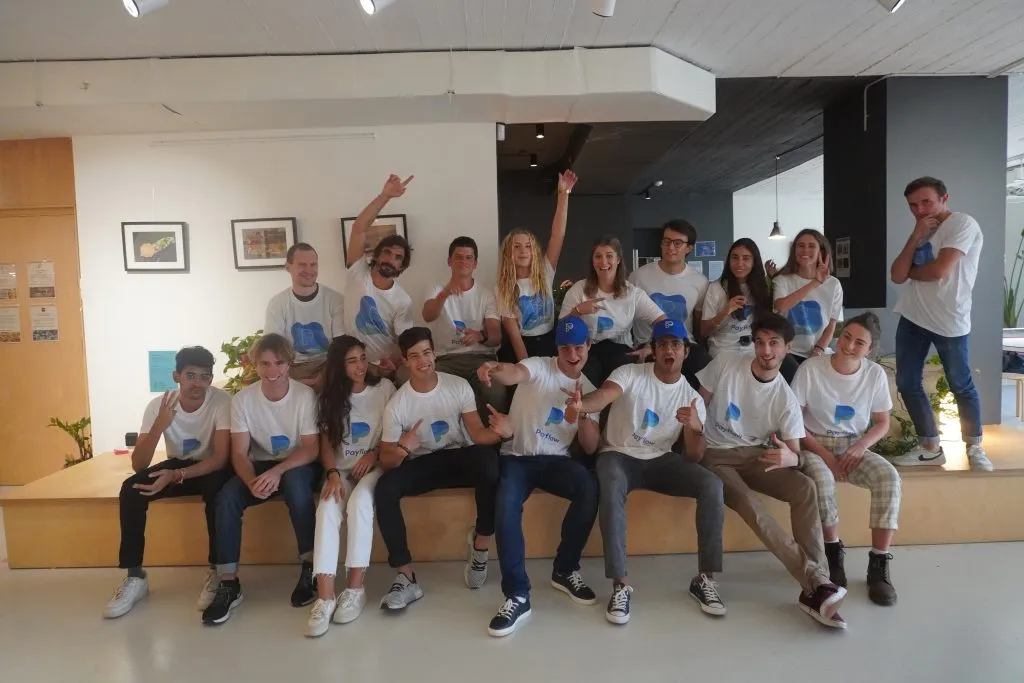
Payflow team
Eric Fernadez
CEO and co-founder of Kubbo
Kubbo is a startup that helps any ecommerce set up an Amazon Prime Now-style environment in a matter of minutes. Basically we’re a startup with technology that lets our customers generate recurring purchases. What does that mean? Basically our customers and merchants invest a lot of money in acquiring new users and customers. But that investment doesn’t pay off if they’re not able to generate that recurring sale of their products on their eCommerce sites, on their sales pages.
We started operating in February 2020, and the COVID situation has made consumer mindset change more and more, consumers have realised they need to receive their online purchases as soon as possible. And that’s what has made our customers realise that they need to make more and more deliveries, faster, more agile and higher quality for the consumer.
As for the team, we started with the two co-founders, Víctor and me, and two people on the tech team: our CTO and a full-stack developer. You need those two tech profiles to help develop the MVP. Our recommendation, after the experience we’ve had, is to minimise time to market. People talk a lot about the MVP, but until you’ve lived it yourself it’s hard to really grasp it. That is, launching with the smallest possible version that lets you operate, even if it’s a bit embarrassing, during the first months, the app, the system you have. But it’s just an MVP, and it’s going to have to be rebuilt and it’s going to have to scale.
Starting in June, we decided to bring in a Head of Product. We preferred to invest in someone who would think through and develop the product with efficiency as the goal throughout the development process. Also, the person who joined also had well-developed UX/UI skills, so it was a two-for-one.
We also brought in the first people in the operations department. We have a fairly high operational component and quite a heavy load here, and with the following hires, we built our first sales team. Soon someone will join the Business Intelligence team. A frontend developer also joined in September. We’re looking for positions in Marketing, in Tech and we’ll keep strengthening all the areas we need to keep scaling and growing at the pace we need to grow.
The most notable thing I’d say is that a startup is about balancing teams. That is, when there are only two of you, everything gets done by those two people or however many co-founders there are. Then you start strengthening the tech side, which always ends up falling short. The same happens with sales. You start strengthening the sales area a lot, you start having a constant flow of new customers, and so you need to strengthen the Customer Support or operations side on the other end. So it’s a balancing act, you have to manage resources very well so the company can grow in a healthy way.
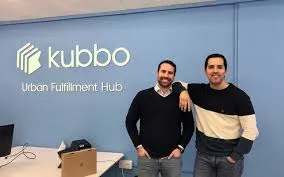
Eric and Victor, co-founders of Kubbo
Both Víctor and I try to provide support in every area. The most important thing is finding that talent that’s no longer defined only by technical skills. If we look at technical skills depending on the position, we focus more on profiles with two or three years of experience.
For us, what defines that entrepreneurial concept is people with a very clear mindset, people who know they’re coming to a startup to develop a product, that the risk is very high because you have to find product-market fit. Many challenges have to be solved to make the startup successful.
We need people with a very good attitude, people who are very open to change. We need very dynamic, very positive people, because things don’t always go well, so we need people who don’t fall apart, people who know that in the face of adversity they should want to fight harder, and people with commitment.
Who is the ideal candidate?
Mariana Bradach
Talent Acquisition – Factorial
In job descriptions you’ll always find what these soft skills we’re looking for are. It’s also about self-awareness and asking yourself what activities, work-related or not, have shaped you and what things you’ve developed.
When you have an interview with any company, you have to understand that if the person interviewing you asks you a question, it’s the same as if your manager asked you to do something. We look at your ability to react and how you’re going to respond to that situation. We also look at how much you know about the company, this is very important. You have to research the company you’re applying to, and know why you’re interested in working there, and what your value proposition is as a candidate. Ask yourself what makes you different.
We look at attitude, drive and willingness. And really, whether people understand what moment in our history they’re joining and what we need. We look for entrepreneurial spirit, mental flexibility, openness to change, the drive to grow, the drive to be a better professional, the drive to improve personally. And wanting to add to the project.
Oriol Blanc
Director of Engineering – Factorial
In tech specifically, you have to be very curious, because technology is a very fast-changing world. We look for tech profiles who are extremely curious, inquisitive and eager to solve problems with technology.
Benoit Menardo
CEO and co-founder of Payflow
I think we also look for the spirit of a winner, because it’s us, the team, against the world. And I’d add that we’re very flexible. I don’t care if people come in a suit or a swimsuit, or if you work from home, from the beach, or from the office. Flexibility is something everyone looks for and startups offer the independence people need to work, because there’s a lot to do.
Eric Fernadez
CEO and co-founder of Kubbo
These ideal tech profiles are people who seek out challenges, people who, when they see a problem ahead, put all their effort into solving it.

Itnig – coworking space for startups
What’s the atmosphere like at a startup?
Mariana Bradach
Talent Acquisition – Factorial
It’s a super dynamic, ever-changing, fun, very entertaining atmosphere. These are companies that don’t have a long history and that want to give it their all and want to grow. So you’re joining a team where everyone has overwhelming enthusiasm, everyone is eager to grow, everyone is eager to learn.
Team members come from different countries, each nationality with its own particularities, and it’s interesting because you learn a lot. In general, at startups the average age is fairly young, so that shapes the philosophy with which you approach everything, including problems. There’s a lot of mental flexibility, a lot of openness to change, a lot of open-mindedness in general when it comes to accepting different things.
Overall, what I can say is that it’s constant learning and constant challenges. At startups people work a lot, but it’s a workload that’s carried with a lot of joy. It’s a place where people understand how important it is for people to be happy, how important it is for people to add value.
As for opportunities for professional and personal growth, there are many. You can grow and learn from people who come from all over the world with different mindsets. You learn to support other people, and you learn to receive support. You make friends, you make contacts, there’s always someone to learn something from. It’s about creating an environment where you’re constantly innovating.
At Itnig, we’re always looking for ways to build and expand community around entrepreneurship and technology. And we always try to share content that helps this community keep growing.
Want to work at a startup?
👉 Check out our job board!