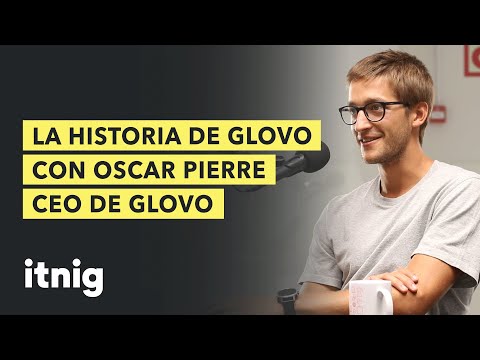
Bernat Farrero explains how Itnig invests in new projects
Itnig is a startup ecosystem, creators of Factorial, Camaloon, Quipu and Parkimeter. We currently focus on investing in early-stage projects, through our investment vehicle. We also have a coworking space for startups and freelancers, where we also organise events. And finally, we have a weekly podcast in which…
Itnig is a startup ecosystem, creators of Factorial, Camaloon, Quipu and Parkimeter. We currently focus on investing in early-stage projects, through our investment vehicle. We also have a coworking space for startups and freelancers, where we also organise events. And finally, we have a weekly podcast where we discuss entrepreneurship, technology and business.
Itnig – Startup Ecosystem
How did Itnig come about?
Itnig started around 2009 as a software development agency. It started at the Universitat Politècnica de Catalunya. Basically we were nerds, we loved technology and we were always looking for excuses to sell projects and try new things. And so, we started selling projects. Then, at a certain point we started working for entrepreneurs and we liked the experience.
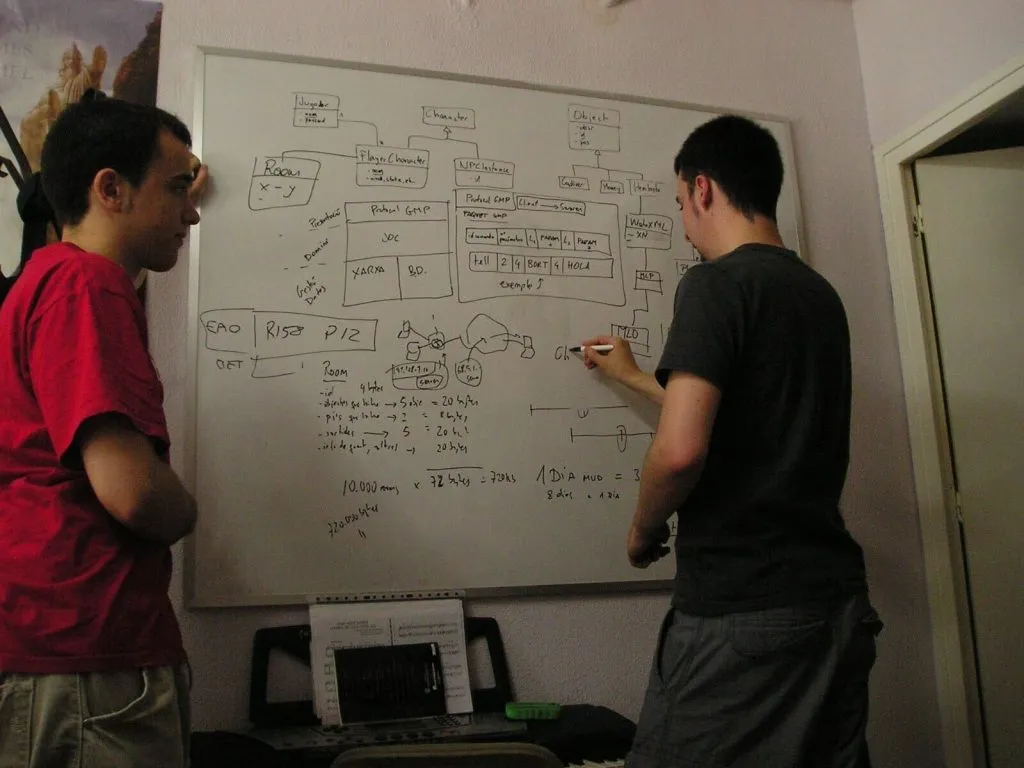
Bernat Farrero and Roger Campo: the beginnings of Itnig
We saw that technology wasn’t enough, that a whole lot of other things were needed, like marketing and sales, for projects to succeed. And so, we asked ourselves: “If we’re good at helping people reach their goals, why don’t we do it? Why don’t we start a project ourselves?” And then we decided to start Camaloon, an on-demand printing company.
At the time it made a single product, custom badges, in a single market, Spain. We sold online, we built a very easy process to design your own product and receive it within 24 hours. And we started getting a lot of customers, and we rolled out the same model to other printing categories: magnets, stickers, then apparel… A whole lot of products, and we opened several markets in Europe: France, Italy, Germany… It’s a pretty spectacular growth, we went from 0 to 200 people and almost 20 million euros in revenue.
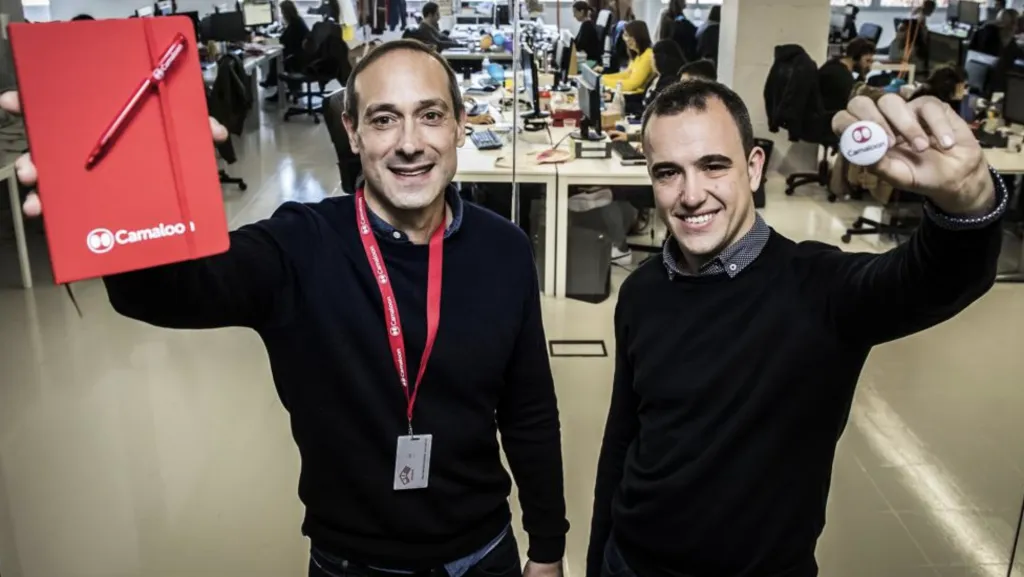
Juan Rodríguez, CEO of Camaloon, and Bernat Farrero, founder
That’s a bit the history of Itnig: we started by building technology and we learned to build entire businesses. We started Camaloon, our first startup, and we decided not to stop there and created 12 more businesses, of which 6 have worked, and 2 we sold: Playfulbet and GymForLess. The other 4 are the ones we’re really focused on growing. Camaloon is still the biggest, then Quipu, Parkimeter, and Factorial, which is our latest startup and where I currently work full-time.
Right now we’re 300 people within the Itnig ecosystem. It’s an ecosystem because we have a coworking space, where we host startups like us, that are looking for an ecosystem that enriches and supports them. The coworking space has a cafeteria, it’s pretty big, 850 square metres. There we share a lot of ideas, we hold events, we talk about business, marketing and technology.
When we sold Playfulbet and GymForLess, we also decided to open a small investment fund to invest in more startups. So, every week we have a pitching session for entrepreneurs, they come to present their projects in exchange for feedback from investors and an audience.
Creating our own projects from scratch
Creating Camaloon made us look a bit further and say: “let’s go find customers and businesses”, and, of course, when you want to build a business in a market that has existed forever, like printing, you’d better think about how to do things differently, because otherwise it definitely won’t grow.
Markets aren’t waiting for new people to arrive, they’re already carved up. If you want to attract customers, you have to do things differently. You have to add a lot more value to be able to grow significantly. And that’s a bit what we try to do.
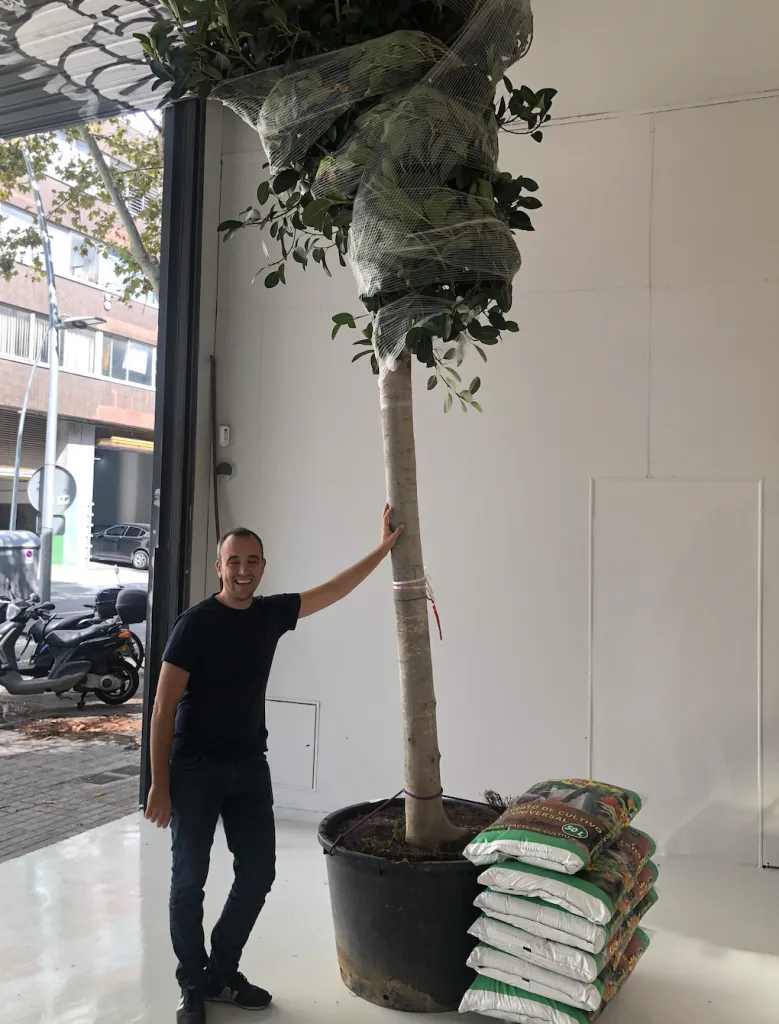
Itnig Coffice: coworking and events space
External support
Itnig started without a single euro and has always relied on the support of all kinds of investors. Usually they’re business angels, individual investors who’ve made their own contributions, more than 150. We’ve also had support from investment funds that have invested in our businesses.
At Factorial, for example, we have one of the most important funds in Europe. And the last 15 million euro round, which we closed three months ago, we closed with CRV, an American fund from Silicon Valley, one of the oldest and best known in the sector. We’ve also had support from Enisa. That is, we live in an ecosystem that has clearly supported us from day one.
How is the team distributed?
Each project is really a world of its own. In itself, the Itnig group is very few people. The 300 people I mentioned are spread across each of the startups (Camaloon, Quipu, Factorial). Each startup is a company and hires its own team. Itnig itself is a partner in all the startups. In some cases a majority partner, in others not so much.
Creating our own businesses vs. investing in third-party businesses
There’s a big difference between the startups where we’re involved and the projects in which we only invest. In the projects we create, Camaloon, Quipu and Factorial, we take part in management. I, in fact, manage a sales and marketing team at Factorial. Whereas investing in third-party companies, which is the only thing we’re doing there, we invest once: between 100 and 150 thousand euros. We only get in at the very beginning of the businesses, we don’t take part in their management.
What are the requirements for Itnig to invest in a startup?
Two things. One: seeing that the market this entrepreneur is targeting is a market where there’s an opportunity. We assess that subjectively, against the huge margin of error we have. There are markets that change, that grow… So, if they’re in transformation and there’s an opportunity to do something different in that market. It’s an assessment we make ourselves, in-house.
And the second: we look for teams that are really very ambitious, that think completely outside the box. And that think about how to change the industries they’re in. We want people who think “I’m going to change how that industry works, and why not everywhere in the world”.
We like people who are very product-oriented and know how to build it; people who know how to design a truly modern user experience, user-oriented and that make life easier. We really like investing in products, and in people who are very tech-oriented, because that’s our core.
Pitch to Investors: every Thursday at Itnig
In conclusion, to invest in a project, we need to understand the market and see an opportunity, and the team needs to have the strength and energy to build. We invest in agile entrepreneurs who know how to move and are able to see the opportunity in any situation.
We look for people who think about how to create something new out of the new problems that have appeared in the current context. In the end, the fund is an excuse to have strong people around us.
How much is invested per project?
We invest in startups that are at very early stages, even if there’s barely a product or no business metrics. We invest between 100 and 150 thousand euros per project. That’s what we do to keep taking part in new projects: investing.
We invest in exchange for a percentage of the business, and it’s a negotiation that will depend on each case. In some cases we get 15 percent, in others 2%.
Startups Itnig has invested in over the last year
SyraCoffee
Syra is a coffee brand, that distributes through small physical points of sale, but that has also opened up its online business very strongly, also with one-hour delivery. And it has grown more than any of its stores, currently its biggest store is the online part.
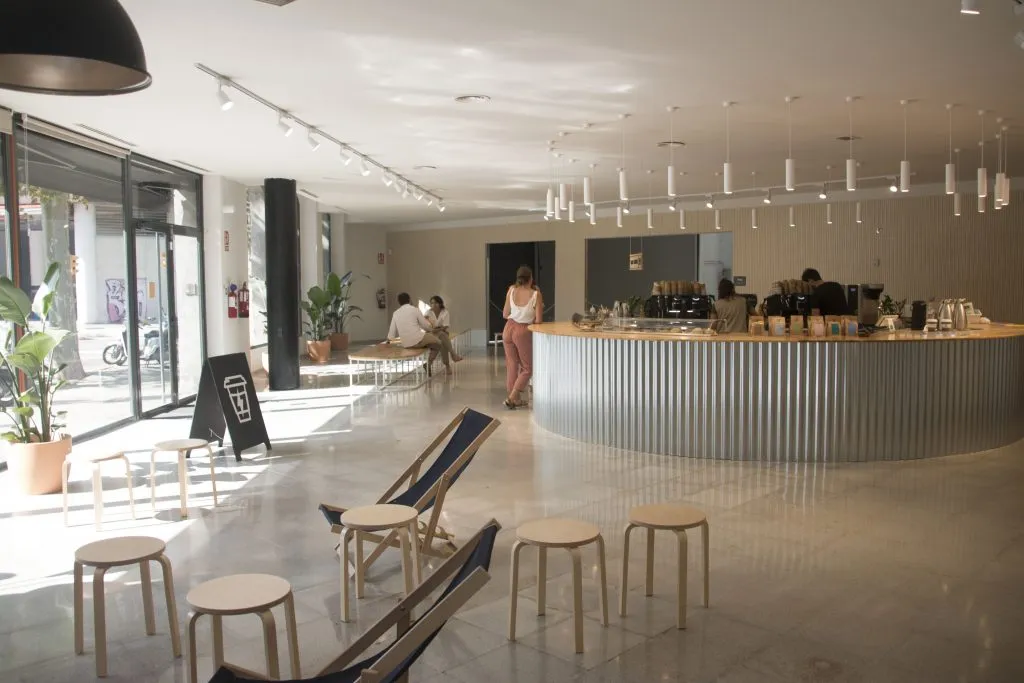
SyraCoffee café at Itnig Coffice
Payflow
Founded in February 2020, Payflow is a new fintech that lets employees withdraw the portion of their salary they’ve already earned, instantly, through a mobile app whenever they want. The startup has closed a 1.6 million euro round after barely 6 months of life.
Vasquiat
Vasquiat is a brand that lets fashion designers and fashion brands sell their collections before releasing them to the market, like a kind of closed club for users. It lets brands validate ahead of time how their collections will perform. The startup sells to more than 40 countries around the world.
Hireflix
Hireflix was founded by Nacho González Barros, an entrepreneur and founder of many successful businesses, including Infojobs, Niumba, Mailtrack, etc. The platform aims to streamline the recruitment process, letting companies pre-record an interview and easily share it with candidates.
Kubbo
Kubbo is a distributed logistics system, so that small businesses can deliver their products within an hour. It offers e-commerce businesses a very fast and efficient delivery service.
Orain
Orain enables digital payment on all kinds of self-service machines, such as vending machines, cafés, laundromats, parking lots, car washes, etc., and all the associated services to guarantee an optimal buying experience.
Main startups created by Itnig:
Factorial
It’s a human resources management software. We offer contract signing, employee absences, sick leave, time tracking. Everything related to employee management, we digitalise it in a way that’s very easy for anyone to understand.
In episode 122 of the Itnig podcast, Jordi Romero tells us the origin of Factorial.
Camaloon
Camaloon is an e-commerce, on-demand printing business, that allows the design of custom products, mainly for companies.
Quipu
It’s an administrative and financial management software for SMEs, which basically brings together cash management with income and expense invoicing management, and lets you see how your business is doing in real time.
Parkimeter
With a network of more than a thousand parking facilities spread across hundreds of cities in Spain, Portugal, Italy and France, Parkimeter is a European leader in digital parking solutions.
At Itnig we’re always looking for talent, ambition and the desire to change the world.
If you have a startup and are looking for funding, apply to the Itnig Fund, or come to our Pitch to Investors every Thursday.
Subscribe to the channel + the newsletter, or come check out our coworking space for startups and take part in our events.